Hey there, if you’ve ever picked up a G4 bulb to replace that tiny, bright light under your kitchen cabinet, inside your bathroom mirror, or lighting up a little shelf with decor, you’ve probably wondered the same thing we get asked all the time: “How long do these things actually last?” As a G4 bulb supplier, I field this question at least three times a week from customers—whether they’re a homeowner trying to plan when to grab spares, an electrician working on a small remodel, or even a boutique hotel manager stocking replacement bulbs for their accent lighting. The answer isn’t just a random number, and it’s way more tied to how the bulb’s made, how you use it, and even where you stick it than you might think. Let’s break this down straight, no fancy jargon, just real talk about G4 bulb lifespans. G4 Bulb
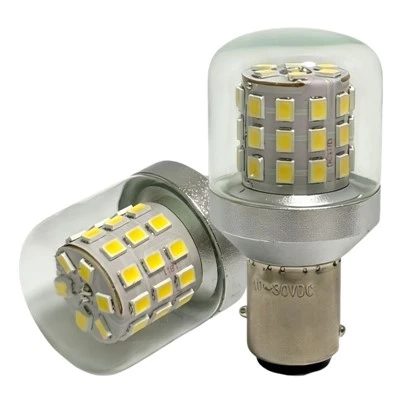
First off, let’s get one basic fact out of the way: G4 bulbs aren’t a single type. That’s the biggest reason people get confused about their lifespan. The “G” stands for Globe, right? And the “4” is the diameter in millimeters—so a G4 is a tiny, round bulb 4mm across, basically. But inside that tiny glass bubble, you’ve got three main types of tech these days, and each one has a totally different lifespan. Let’s start with the old-school ones you might’ve grown up with: incandescent G4 bulbs. Yeah, those are super rare now, banned in most countries for being energy hogs, but you’ll still find them on Amazon or at small hardware stores if you hunt. Incandescents run on a heated filament, so their lifespan is short—usually like 1,000 hours max. I remember when we used to get calls from customers saying their incandescent G4 burned out in 3 months, and that makes sense if you run it 8 hours a day: 1,000 divided by 8 is around 125 days. Not great, and they use way more power too, so most people are switching to LED these days.
Now the big player everyone’s asking about is LED G4 bulbs. That’s what we sell most of, and it’s what most homeowners are replacing into. But here’s the thing—LED lifespan isn’t like old bulbs where the filament blows or the glass breaks. LEDs don’t “die” suddenly usually; they dim over time, because the LED chips degrade slowly when they’re on. Manufacturers measure this in “L70 lifespan” which sounds weird, but it’s just the number of hours the bulb takes to drop to 70% of its original brightness. That’s the standard everyone uses, right? Because most people won’t even notice a 30% dim, but after that, it starts looking dull. So for LED G4 bulbs, what’s the actual number? Good quality ones, from a reputable supplier like us, run between 15,000 and 25,000 hours. Wait, but hold on—those are the premium ones. The cheap ones you get for $1 a piece? Those might only hit 8,000 hours, and that’s if you’re lucky. Why the big gap? Because of the parts. Cheap LEDs use crummy chips, bad heat sinks, and shoddy wiring. G4 bulbs are tiny, so heat is their biggest enemy. If a bulb can’t get rid of the heat it generates, the LEDs degrade way faster, no matter what the packaging says.
Then there’s the third type: halogen G4 bulbs. Halogen is the middle ground between incandescent and LED. They have a tiny filament too, but they’re filled with halogen gas that makes the filament burn hotter and longer. Their lifespan is around 2,000 to 4,000 hours. That’s way longer than incandescent, but way shorter than LED. Halogen is still common in some older RVs, under-cabinet lights, or landscape lights, but they use more power than LED and get super hot—you can actually burn yourself if you touch a running halogen G4. We stopped stocking halogen a couple years ago because customers kept coming back saying they burned out too fast and used too much electricity, so we shifted all our stock to LED G4s a while back.
Okay, so now that we’ve got the types down, let’s talk about the things that mess with a G4 bulb’s lifespan, because even a 20,000-hour LED can die in 6 months if you use it wrong. First, usage hours. That’s obvious, right? If you run a bulb 24/7, it’s going to burn out way faster than one that only runs 2 hours a day. Let’s do the math: a 20,000-hour LED, running 8 hours a day, that’s 250 days, or around 8 months. If you run it 2 hours a day? That’s 10,000 days, which is over 27 years. Wait, that’s a huge difference! Most under-cabinet lights only run a few hours a day, so your LED G4 should last you years, not months.
Next, heat. G4 bulbs are tiny, so putting them in a space with no ventilation is a killer. Like, if you stick a G4 in a closed fixture with no gaps for air to flow? The heat can’t escape, so the LED chips overheat and die way faster. I’ve seen customers put G4s in sealed landscape light fixtures that are buried under mulch, and those bulbs burn out in 6 months, when if they’d been in an open fixture, they’d last 5 years. Even bathroom fixtures—if your bathroom has no vent and gets super steamy, that extra humidity plus heat can shorten the lifespan too.
Then there’s voltage. Oh man, this is one of the most common mistakes people make, and it’s so avoidable. G4 bulbs run on low voltage, right? Usually 12V, not 120V like regular household bulbs. If you plug a 12V G4 into a 120V outlet—even with an adapter that’s wrong, or if your transformer is bad—you’re feeding way too much power to the bulb, and it’ll blow out in minutes. We get so many returns from people who say our bulbs died immediately, and 9 times out of 10, they just mixed up the voltage. That’s why we always include a little note with every order reminding people to check their transformer output, but it’s wild how many folks skip that.
Another thing: how you install them. G4 bulbs are often push-in or pin-based, right? If you’re not inserting them all the way, or if the pins are bent, they don’t make a good connection, and that can cause the bulb to flicker, overheat, or just fail early. I’ve had electricians tell me they see a lot of bad G4s because the pins were bent when someone was replacing the bulb, so it didn’t seat right. That’s an easy fix—just make sure the pins are straight before you push it into the socket.
Wait, what about on/off cycles? A lot of people don’t think about this, but every time you turn a bulb on, it gets a little surge of power. For incandescent and halogen, that’s not a huge deal, but for LED? It can shorten lifespan if you turn the bulb on and off constantly. Like, if you have a G4 in a closet that you open and close 10 times a day, that’s more cycles than a bulb that’s only on for a few hours at a time. So that might knock a few hundred or thousand hours off, but it’s not going to make a 20,000-hour LED die in a week. It’s more of a small factor than the big ones like heat or wrong voltage.
Now, let’s get back to the numbers, because I know people want a straight answer. If you’re buying a good quality LED G4 bulb from a reliable supplier (shoutout to us, obviously), the realistic lifespan you can expect is between 10 and 15 years in a typical home setting. Wait, how’d we get that number? Let’s use that 15,000-hour L70 number, average usage of 3 hours a day: 15,000 divided by 3 is 5,000 days, which is around 13.7 years. That’s way longer than halogen’s 2,000 hours (which is only ~1.8 years at 3 hours a day) and incandescent’s 1,000 hours (like 9 months). That’s why so many people are switching—you’re not replacing bulbs every year, you’re replacing them once a decade. But again, that’s only if you get a good bulb. The cheap Amazon ones with no brand name? Those will be lucky to hit 5,000 hours, which is less than 5 years. We see a ton of customers come to us after buying cheap bulbs that burned out in a year, and they’re shocked at the difference when they switch to our premium LED G4s.
Another point: warranty. That’s a good way to gauge how long a bulb is supposed to last. Most good LED G4s come with a 2 to 5 year warranty. If a bulb only has a 1-year warranty, that’s a red flag—manufacturers wouldn’t stand behind a bulb that’s supposed to last 15,000 hours with only a year of coverage, because if it dies early, they have to replace it. So when you’re shopping for G4 bulbs, check the warranty. We offer a 3-year warranty on all our LED G4s, because we know they last way longer than that. That’s not a marketing gimmick—we’ve tested them, and we’ve had customers tell us our bulbs are still going strong after 6 years.
Wait, what about niche uses? Like G4 bulbs for RVs, or landscape lighting, or commercial use? Those have their own factors. RV G4s get jostled around a lot, so vibration can affect the lifespan. Cheap LEDs don’t have sturdy parts, so vibration can loosen connections or damage the chips. We make a specific RV-grade G4 bulb that’s built to handle vibration, and those have a slightly shorter lifespan, around 12,000 hours, but that’s still way longer than halogen RV bulbs. For landscape lighting, they’re outside, so they get temperature swings, rain, humidity—we make outdoor-rated G4s that are sealed against moisture, and those last just as long as indoor ones if they’re installed in an open fixture with good air flow. Commercial use is different too—if a restaurant is running their G4 accent lights 12 hours a day, 7 days a week, their lifespan will be shorter, around 5 years, but that’s still way better than replacing halogen every 6 months.
Let’s bust a common myth too: some people think LED bulbs last forever. No, they don’t. Even the best ones will eventually dim and die. The L70 number is important because that’s when most people start noticing, but the bulb will still be putting out light, just not as bright. You can keep using it, but if you wanted a bright accent light, you’ll notice the difference. And when it does finally go, it’s usually a slow fade, not a sudden burn-out like old bulbs. One week it’s bright, the next it’s dim, then it’s almost gone. That’s way better than having a bulb blow out all over your fixture, leaving glass shards to clean up.
So putting this all together, what’s the takeaway for anyone shopping for G4 bulbs? If you want the longest lifespan, go for LED, get a reputable brand with a decent warranty (2+ years), make sure you get the right voltage (12V for most G4s, unless you have a rare 24V fixture), install them in fixtures with good ventilation, don’t bend the pins, and use the right transformer. Skip the super cheap no-name ones—they’re not worth it, they’ll burn out fast, and you’ll end up spending more money replacing them over time.
As a G4 bulb supplier, we’ve helped hundreds of homeowners, electricians, and small businesses pick the right bulbs for their needs. We don’t just sell bulbs—we answer questions, help people figure out what voltage they need, explain why one bulb is better than another, and make sure they get the longest lifespan possible out of their G4s. We know how frustrating it is to have a tiny accent light burn out when you’re in the middle of a project, or when you have to climb up to replace a bulb in a high fixture. That’s why we stock only high-quality LED G4s that are built to last, with the warranty to back it up.
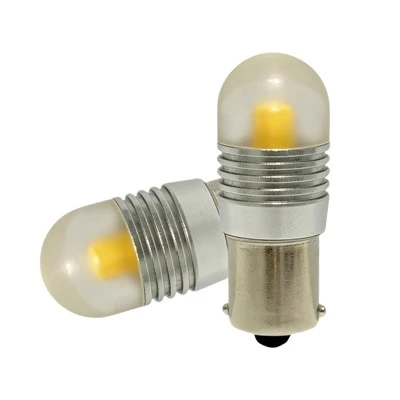
If you’re in the market for G4 bulbs, whether it’s for a home remodel, restocking your RV, or outfitting a commercial space, we’d love to chat. We can help you pick the right type for your use, answer any other questions you have about lifespan, brightness, or installation, and get you the bulbs you need. Don’t waste time or money on cheap bulbs that’ll die in a year—reach out, and we’ll make sure you get G4 bulbs that last for years.
BA15D/BAY15D Bulb References:
- Energy Star, “LED Lighting Facts: Lifespan & Performance,” 2022.
- Illuminating Engineering Society (IES), “LM-80: Approved Method for Luminous Flux Maintenance of LED Packages,” 2020.
- Department of Energy (DOE), “Guidelines for Selecting LED Lighting Products,” 2021.
- Lighting Research Center (LRC), “Halogen vs. LED Bulb Lifespan and Efficiency,” 2023.
- National Electrical Manufacturers Association (NEMA), “Low-Voltage Lighting Component Standards,” 2022.
BULBPLAN Co., Ltd.
As one of the most professional g4 bulb manufacturers and suppliers in China, our products have good reputation in the market. Please feel free to wholesale cheap g4 bulb for sale here and get pricelist from our factory. Quality products and reasonable price are available.
Address: No. 86 Zhongli Road, Nancheng Street, Dongguan City, Guangdong Province
E-mail: Alex@bulbplan.com
WebSite: https://www.nicebulbs.com/
