Hey there, fellow power users and anyone tired of being left in the dark mid-camping trip or when the grid crashes. I’m Jake, and for the last six years, I’ve been deep in the portable power station game—first as a weekend camper who burned through three cheap, flimsy units in a year, and now as part of a team that supplies solid, reliable ones to folks just like you. Today, we’re breaking down something I get asked at least a dozen times a week: what’s the actual price range for a portable power station? No marketing fluff, no confusing jargon, just the real deal. Portable Power Station
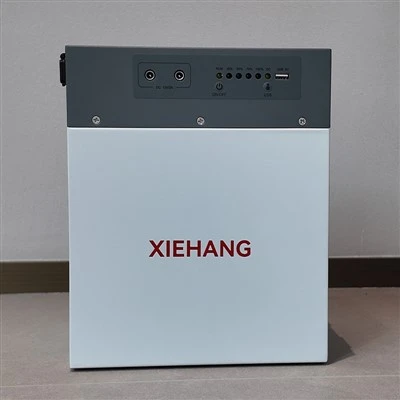
Let’s start with the basics—you can’t talk price without talking what you’re actually getting. I’ve seen people walk into this thinking all portable power stations are the same, and that’s where they go wrong. A tiny one that can charge your phone twice is way different from a beast that runs a mini fridge or a power tool for hours. So I’ll keep this split into three main tiers, since that’s how most people shop: budget, mid-range, and premium. Each has its own spot, and I’ll tell you exactly who should buy which.
First up, the budget tier. This is the stuff you’ll see at big-box stores, Amazon’s “Top Rated” (but not always the best), and even gas stations for those last-minute camping runs. Price-wise, these usually run from like $50 to $300. Wait, I know—$50 to $300 is a big gap, right? That’s because even budget stations have different capacities. The tiny ones under 100 watt-hours (Wh) are the $50 to $150 ones. Think about it: a standard iPhone is around 12Wh, so a 100Wh unit can charge your phone 8 times, or a laptop once or twice. These are great for tailgates, quick work-from-home power blips, or emergency phone charges when your car dies. But don’t expect them to do much more than that. If you try to plug in a mini fridge, it’ll die in 15 minutes max, and I’ve seen some of these overheat if you leave them running too long. I won’t lie—we sold a few of these years back just to test the market, and most customers came back saying they broke within 6 months. They’re cheap for a reason: low-quality batteries, flimsy ports, no safety features like overcharge protection.
Then the mid-range budget stuff, still in the budget tier but a step up, is $150 to $300, usually between 100Wh and 500Wh. This is where most casual campers or people who want home backup land. A 300Wh mid-range station will charge your phone 20 times, run a small fan or LED string lights for 8 hours, or a laptop 5 times. The 500Wh ones? They can handle a mini fridge for about 4 hours, which is perfect for a weekend car camping trip where you don’t want to haul a giant generator. The biggest difference here is build quality. We’ve kept a handful of these in our shop for testing, and one’s been running for 3 years straight—no issues. They have real safety features, more durable plastic, and ports that don’t wiggle after a few uses. Yeah, they’re not as cheap as the $50 ones, but you get what you pay for. I’d rather tell a customer to spend $250 on a mid-range unit that lasts 3 years than $80 on a cheap one that dies in 6 months.
Now, mid-range overall. This is the sweet spot for most people, and it’s where I recommend most of our customers start if they’re serious about portable power. Price here is roughly $300 to $1,200. The capacities jump from 500Wh up to 2,000Wh (that’s 2kWh, for anyone who’s not a power nerd). Let’s break that down. At the lower end of this range, $300 to $600, you get 500Wh to 1,000Wh. A 1,000Wh unit can run a small mini fridge for 8 hours, a microwave for 10 minutes, or charge a bunch of gear for a full weekend. That’s the go-to for people who do regular car camping or need backup power for a medical device at home. Then the higher end of mid-range, $600 to $1,200, gets you 1,500Wh to 2,000Wh. These are the ones that can run a window AC unit (small, 5,000 BTU) for 2 hours, a power drill all day, or even a TV and router for a blackout. A lot of people don’t realize that “continuous wattage” matters here too, not just total Wh. Cheap mid-range units might brag about 2,000W peak but only 1,000W continuous, which means they can’t handle constant power draws like a fridge. We test every unit we sell, so we never cut corners there. One of our most popular mid-range models, the Rocko 1500, is $899, has 1,500Wh, 1,500W continuous, and can be charged via solar panels or a wall outlet in 2 hours. Folks love it because it’s not too heavy (22 pounds) and does almost everything they need without breaking the bank. I see this tier as the “no regrets” zone—you’re paying for real lithium-ion batteries (the same kind in your phone or electric car), better inverters that don’t hum or burn out, and actual customer support if something goes wrong.
Then there’s the premium tier. This is for people who need heavy-duty power, whether that’s for off-grid living, construction sites, or whole-home backup during a long blackout. Price here starts around $1,200 and goes up to $5,000 or even more for the biggest, badass units. Capacities here are 2,000Wh all the way up to 5,000Wh (5kWh) or more. These units have super high continuous wattage—up to 3,000W or 5,000W—which means they can run a full-size fridge, multiple AC units, a washing machine, or a power station for tools all at the same time. A lot of premium units also have modular designs, so you can add extra battery packs to boost capacity later, or built-in solar panels that fold out for off-grid use. The big brands in this space (we work with a couple of them) also have way better warranties—some up to 5 years, compared to 1 or 2 for mid-range. Sure, $3,000 for a 3,000Wh unit sounds steep, but if you’re relying on it for work or to keep your family safe during extended outages, it’s worth it. I had a customer last year who’s a park ranger—he needed something that could power his communication gear, a small heater, and a coffee maker for 3 days in the backcountry. We hooked him up with a premium unit, and he said it worked better than the big gas generator he used to haul around, and way quieter too. No more neighbors yelling at him for running a generator at 5 a.m.
Wait, but before you go running off to buy the first unit you see, there are a bunch of factors that affect price that I haven’t mentioned yet. Let’s be real—this isn’t just about Wh. First, battery chemistry. Most good portable power stations use lithium iron phosphate (LFP) batteries now, right? They’re safer, last longer, and hold their charge way better than the old lithium-ion cobalt batteries. LFP units are usually $50 to $100 more expensive than ones with regular lithium-ion, but they’re worth it. We had a customer who bought a cheap LFP unit vs. a regular one—after 2 years, the regular one only held 50% of its charge, while the LFP still holds 90%. That’s a huge difference over time.
Then there’s expandability. If a unit lets you add extra batteries or charge via solar panels, that’s a price bump. But it’s a smart one if you think you’ll need more power down the line. Some units also have smart features—like an app that lets you monitor how much power you’re using, schedule charges, or even control ports remotely. That’s nice, but not everyone needs it, so don’t pay extra for features you’ll never use.
Solar compatibility is another big one. If you plan to charge your station with solar panels while camping or off-grid, you’ll want a unit that has built-in solar input. A lot of mid-range and premium units have that, but some budget ones don’t—you’d have to buy an adapter, which adds $50 to $100. So factor that in if that’s your plan.
Now, let’s get to the actual practical part—who should spend what. If you’re a casual camper, only need to charge phones and lights, and don’t want to drop more than $300, go mid-range budget. You’ll get something reliable that lasts. If you need power for a weekend trip with a small fridge, or backup for one medical device at home, go mid-range ($300 to $1,200). If you’re off-grid, need whole-home backup, or run tools on job sites, premium ($1,200+) is the way to go.
I also have to talk about hidden costs. A lot of people don’t think about this, but portable power stations need to be charged, right? The cost of electricity to charge them is super low—like, a 1,000Wh unit uses 1 kWh, which is like 10 cents in most places. Solar panels do add an upfront cost, but over time, they pay for themselves and let you power the station for free. Also, don’t forget about maintenance—you just need to keep them in a cool, dry place, not leave them in your car in extreme heat or cold. That’ll extend their life.
Wait, let’s address a common myth I hear all the time: “Portable power stations are way more expensive than gas generators.” Yeah, upfront they might be similar for small units, but gas generators need gas, oil, maintenance, and they’re loud, heavy, and pollute. A 2,000W gas generator is around $1,000, and you have to spend $50 a month on gas and oil if you use it regularly. Over 2 years, that’s $1,200 just in fuel, plus maintenance. A portable power station? No fuel, no maintenance except occasional checks, and way quieter. So in the long run, they’re actually cheaper for most people.
I’ve been in this game long enough to see so many people make the wrong choice because they just go for the cheapest option. A friend of mine bought a $70 unit for a 1-day camping trip, and it died halfway through, leaving his whole group without power for their mini fridge. Don’t be that guy. Do a little math on what you actually need. Make a list: what devices will you run, how long, do you need it for emergencies or just trips, will you use solar? That’ll narrow down the range.
At the end of the day, the price of a portable power station isn’t just a number—it’s a reflection of what it can do for you. It’s the difference between being stuck waiting for the power company during a storm, or keeping your family warm and fed. It’s the difference between a fun weekend camping trip and one that’s cut short because your gear died. It’s the peace of mind that comes with knowing you have power when you need it.
If you’re still confused about which range fits your needs, or you want to test some units in person, hit us up. We can walk you through all the models, show you how much they can power, and help you pick something that works for your budget. No pressure, no salesy nonsense—just straight talk from someone who’s been there.
PV-Storage & EV Charging All-in-One System References:
- Consumer Reports. (2023). Portable Power Station Buying Guide. Retrieved from Consumer Reports website.
- National Renewable Energy Laboratory. (2022). Battery Chemistry Comparison for Portable Energy Storage. Retrieved from NREL website.
- Outdoor Industry Association. (2023). Camper Power Needs and Equipment Trends. Retrieved from OIA website.
- International Electrotechnical Commission. (2021). Safety Standards for Portable Power Stations. Retrieved from IEC website.
Zhejiang Xiehang New Energy Equipment Co., Ltd.
As one of the most professional portable power station manufacturers and suppliers in China, our products have good reputation in the market. Please erst assured to wholesale custom made portable power station from our factory. If you have any enquiry about cooperation, please feel free to email us.
Address: No.5 Hechen Road, Zhouwangmiao Town, Haining, Jiaxing City, Zhejiang Province, China
E-mail: dan.wu@xiehang.net
WebSite: https://www.shineonpower.com/
