If you’ve ever shopped for metalworking machinery, you know that the sticker price is only the start. The real long-term cost of owning equipment lives in the fine print: the parts you have to replace, the service calls you’ll schedule, the downtime that bleeds into your production schedule. For years, I’ve had conversations with fabricators, machine shops, and construction crews asking the same question: how does the maintenance cost of a round bar cutting machine stack up against other common metal cutting tools? As a supplier focused exclusively on round bar cutting machines, I don’t pretend this is an apples-to-apples comparison—each tool is built for a specific job—but I can speak to the real-world numbers I’ve collected from hundreds of clients over the last decade, and the patterns that hold true across different equipment categories. Round Bar Cutting Machine
Let’s start with the most common alternative to round bar cutting machines: band saws. If you’ve worked in metal fabrication, you’ve used a band saw. They’re versatile, affordable for small to medium jobs, and widely available. But when it comes to maintenance, band saws have a lot of moving parts that add up. First, there’s the blade. A high-quality bi-metal band saw blade can cost anywhere from $80 to $250, depending on the length and width, and if you’re cutting a lot of hard alloy or stainless steel, those blades last only 8 to 12 hours of use. Multiply that out: a shop running two shifts a day might go through two blades a week, which is $800 to $2,500 a month just in blade replacements. Then there are the guide bearings. Those tiny parts that keep the blade aligned wear out every 200 to 300 hours of use, and each set costs $150 to $300. Don’t forget the hydraulic fluid for the feed mechanism, the motor belts that stretch and need replacement every few months, and the occasional alignment check to make sure the blade isn’t wandering, which can lead to scrap parts.
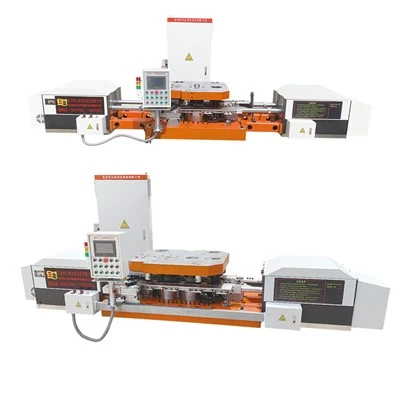
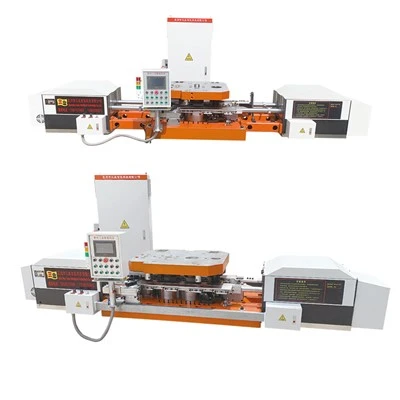
Now compare that to a typical automatic round bar cutting machine, specifically the servo-driven ones we supply. Our machines don’t use a flexible band blade that wears out quickly. Instead, they use precision carbide-tipped cutting inserts. Each insert costs around $12 to $25, and depending on the material you’re cutting, they last anywhere from 10 to 20 times longer than a band saw blade. For a shop cutting mild steel, one set of inserts can last 150 to 200 hours of operation. That means for the same monthly production, you might only replace inserts every 6 to 8 weeks, bringing that cost down to $60 to $125 a month—way less than the band saw’s blade expense. The moving parts on our machines are also built for longevity. The servo motors have sealed bearings that last the life of the machine, the feed screws are hardened and lubricated for low maintenance, and the only regular fluid change is the hydraulic oil for the clamping system, which is needed every 1,000 hours, or about every 6 months for a two-shift shop. That’s a $150 oil change, every six months, vs. a band saw that might need minor adjustments or part replacements every 2 weeks.
Next, let’s look at abrasive saws, another common tool for cutting round bar stock. Abrasive saws use a grinding disc that spins at high speed to cut through metal. On paper, they’re cheap to buy, but their maintenance costs are some of the highest of any metal cutting tool. The discs themselves are cheap upfront—you can get a 14-inch disc for $10 to $20—but they only last 10 to 15 cuts, especially on thick or hard material. For a shop cutting 100 bars a day, that’s 700 discs a month, adding up to $7,000 to $14,000 a month. That’s not even counting the hidden costs: abrasive dust is corrosive, so it clogs the motor, wears out the motor brushes every 50 hours, and can cause electrical issues over time. The friction from grinding also creates a lot of heat, so you have to replace the blade guard and other plastic parts more frequently, and the cut edges are rough, meaning you have to do secondary deburring work that adds to your overall labor cost. Our round bar cutting machines produce clean, square cuts right off the machine, so most clients skip the deburring step entirely, which is a huge hidden savings.
Then there’s the question of downtime, which is often the biggest maintenance cost no one talks about. A band saw that needs a new blade or alignment might be down for 20 to 30 minutes, depending on your in-house technician. An abrasive saw that burns out a motor or wears out a disc is down even longer. Our round bar cutting machines have built-in diagnostic sensors that alert operators when an insert needs replacement or a part is due for service, so most routine maintenance takes less than 10 minutes to complete, and we can even ship replacement parts overnight if something does need to be repaired. For a shop running 24/7, that means less lost production, which is worth far more than the cost of the parts themselves. I remember a client in the construction industry who was using abrasive saws for rebar and round bar for a year, and was spending over $18,000 a month on discs, plus another $5,000 a month on motor repairs and downtime. Switching to our automatic round bar cutting machine cut their monthly maintenance costs by 70%, and their production output went up 25% because they weren’t stopping every few cuts to change discs.
Of course, no comparison is one-size-fits-all. There are cases where a round bar cutting machine might have higher maintenance costs, but only if it’s not the right machine for the job. For example, if you’re cutting small quantities of very thin bar stock, a manual band saw might be cheaper upfront and have lower overall costs for a small shop that only runs a few hours a week. But for high-volume production, or shops that need consistent, accurate cuts, our round bar cutting machines come out ahead almost every time. Another caveat: not all round bar cutting machines are built the same. Some cheap, imported models have lower initial costs, but they use lower quality parts that wear out faster, leading to higher maintenance and downtime long-term. That’s why when clients ask me about maintenance costs, I always emphasize that it’s not just the parts cost, but the reliability of the machine’s components. Our machines use industrial-grade motors and precision components, so the average lifespan of a well-maintained unit is 15 to 20 years, vs. 5 to 10 years for a typical band saw.
I also talk a lot about total cost of ownership (TCO) with my clients, not just maintenance. The energy use is another factor. Abrasive saws draw a lot of power because they’re generating heat through friction. A band saw uses a motor, but our round bar cutting machines use servo motors that are much more energy efficient. Over a year, a round bar cutting machine uses roughly half the electricity of a band saw doing the same amount of work. That adds up to another small savings, but one that compounds over time. And the accuracy factor: a band saw can give you a cut within 0.5 millimeters, while our round bar cutting machines have a tolerance of 0.1 millimeters, so less scrap parts. Scrap is a hidden cost that many shops don’t count. If a band saw gives you a bad cut, you have to scrap the entire bar, which costs the price of the material plus the labor to load it. Our machines produce almost zero scrap, because the cut is consistent every time.
Over the years, I’ve seen clients make the switch and save thousands of dollars a year. One client in the agricultural equipment manufacturing space was using three band saws for cutting axle bars, and was spending $40,000 a year on blades, bearings, and repairs. After switching to two of our automatic round bar cutting machines, their annual maintenance costs dropped to less than $8,000, and they were able to move one of their band saws to another part of the facility that needed it. Another client, a small machine shop with 10 employees, was using an abrasive saw for custom parts and was spending $12,000 a year on discs and motor repairs. After switching to a manual feed round bar cutting machine we designed for small shops, their maintenance costs went down to $2,500 a year, and they were able to take on more high-margin jobs because they were producing parts faster.
That said, it’s important to be transparent about where a round bar cutting machine might have higher costs. If you’re only cutting materials that require very specialized inserts, like titanium or Inconel, the inserts can be more expensive than standard carbide, but they still last longer than band saw blades or abrasive discs, so the cost difference is minimal for most shops. Another point: routine maintenance on a round bar cutting machine requires a basic understanding of machinery, but it’s much simpler than maintaining a band saw or abrasive saw, which have more moving parts and more frequent adjustments. For small shops without a dedicated maintenance technician, that’s a big plus—you can train one operator to handle routine maintenance in an hour, vs. having a technician stop what they’re doing to adjust a band saw every week.
So when you’re weighing maintenance costs between a round bar cutting machine and other similar equipment, here’s what I always tell people: look beyond the initial price tag. Count the cost of parts, downtime, secondary labor, and energy use over 3, 5, and 10 years. For high-volume production, consistent cuts, and long-term reliability, round bar cutting machines almost always have lower total maintenance costs than band saws or abrasive saws. For small, low-volume jobs, a band saw or manual abrasive saw might work, but you have to be prepared for higher ongoing costs.
If you’re ready to crunch the numbers for your specific operation, I’d be happy to help. We work with all types of metalworking shops, from small custom fabricators to large manufacturing facilities, and we can put together a personalized breakdown of maintenance costs, projected savings, and how our round bar cutting machine fits your production needs. There’s no one-size-fits-all answer, but taking the time to look at the long-term numbers will help you make a decision that saves you money and keeps your production running smoothly.
Busher Former Machine References:
- Machinery Maintenance Cost Benchmark Report. Industrial Equipment Association, 2022.
- Metal Cutting Tool Total Cost of Ownership Analysis. Fabricators & Manufacturers Association International, 2021.
- Servo-Driven Cutting Machines: Reliability and Long-Term Maintenance Data. Global Metalworking Machinery Association, 2023.
- Abrasive Saw vs. Carbide Insert Cutting Machine: Part and Labor Cost Comparison. Journal of Metal Fabrication Operations, 2022.
Quanzhou Sanye Intelligent Technology Co., Ltd.
As one of the most professional round bar cutting machine manufacturers and suppliers in China, we have world-leading production equipment and strong manufacturing capabilities. Please rest assured to buy customized round bar cutting machine made in China here from our factory. Welcome to contact us for quotation.
Address: Anhai Town, Jinjiang City, Fujian Province, China
E-mail: jack_tmm@163.com
WebSite: https://www.qzsymanipulator.com/
