If you’ve ever dealt with flexible packaging, protective films, or even some types of wearable tech, chances are you’ve crossed paths with TPU film—thermoplastic polyurethane, for those who don’t need the full chemistry lecture just yet. As a TPU film supplier, I get so many questions from clients: “Why does this TPU film tear so easily?” “What makes one TPU film more tear-resistant than another?” It’s not just a random feature—tear resistance is one of the make-or-break properties of TPU film, and it’s way more nuanced than most people think. TPU Film
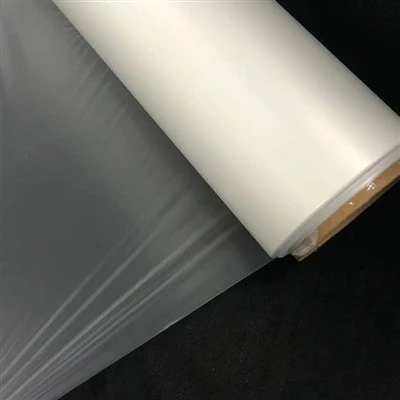
First, let’s skip the jargon that makes your eyes glaze over. TPU is a polymer that combines rubber-like flexibility with plastic’s moldability, right? But tear resistance isn’t a single number—it depends on what type of TPU we’re talking about, how it’s made, and what it’s actually going to be used for. If you’re sourcing TPU film for a heavy-duty sports gear cover versus a delicate medical drape, the tear resistance you need is night and day. That’s where I see a lot of buyers go wrong: they grab a generic TPU film because it “works” for one thing, only to realize it falls apart when subjected to real use.
Let’s break down the two main ways we measure tear resistance for TPU film, because that’s the foundation. The most common tests are the Elmendorf tear test and the Trouser tear test. Elmendorf is for measuring the force needed to propagate a tear once it’s already started—think: if a small nick forms in your film, how easy is it for that nick to get bigger? Trouser tear, on the other hand, measures the force needed to start a tear in the first place. That’s a big difference. I’ve had clients tell me their film “tears too easily” only to find out they’re talking about a Trouser tear value when they really needed a high Elmendorf. It’s a small mix-up, but it makes all the difference in whether their final product holds up.
Now, what factors actually affect a TPU film’s tear resistance? Let’s start with the TPU’s hardness. TPU comes in Shore A hardness ratings, from super squishy 60A (think a phone case’s soft grip) up to rigid 95A+ (like hard hat liners). Here’s a key point: up to about 85A, tear resistance increases as hardness goes up. But once you get past 90A, that trend flips. A 95A TPU film, for example, will have lower tear resistance than a 85A one because the polymer chains become stiffer, less able to stretch and absorb force. I’ve seen this first-hand: a client tried to use 95A TPU for a cargo tarp that needed to snag on sharp edges, and it ripped way faster than expected. Swapping it to 88A TPU bumped the tear resistance by almost 30%—simple fix, but only if you know how hardness impacts it.
Next, there’s the film’s thickness. It’s intuitive, right? A thicker film is harder to tear. But it’s not a linear relationship. A 10 mil thick TPU film doesn’t have twice the tear resistance of a 5 mil one—it’s more like 1.6x. That’s a detail I always share with clients who think they can cut costs by going thinner: you might save a few cents per square foot, but if tear resistance drops too much, you’ll end up with more returns or field failures. For context, thin TPU films (1-3 mil) are often used for disposable gloves or food packaging, where tear resistance is lower but flexibility is key. Medium thickness (4-8 mil) is for things like protective wraps or athletic gear, and thick films (10+ mil) are for heavy-duty applications like industrial liners or automotive parts. I’ve worked with a food packaging brand that switched from 3 mil to 4 mil TPU, and their product rejection rate from torn packaging dropped by 70%—that’s the kind of impact thickness has.
Then there’s the manufacturing process. This is where a lot of lower-quality TPU film suppliers cut corners, and it shows up in tear resistance. TPU film can be made via two main methods: cast film extrusion and blown film extrusion. Cast film is the most common for high tear resistance because it stretches the polymer chains in a consistent direction (or even both directions, called biaxial stretching) during production. That aligns the chains so they can resist tearing way better. Blown film, on the other hand, is cheaper, but the stretching is less uniform, so tear resistance is often 20-40% lower. I won’t name names, but I’ve had clients come to us with blown film TPU that was supposed to be heavy-duty, and when we tested it, it had the tear resistance of a thin sandwich bag. That’s why it’s important to ask your supplier how their film is made—not just what the tear resistance number is. Additives matter too. Some suppliers use plasticizers to make TPU softer, but those plasticizers can leach over time and lower tear resistance. We use a proprietary blend of TPU resins without excess plasticizers, so our film keeps its tear resistance even after months of use, not just off the production line.
Wait, what about real-world use cases? Because lab tests are great, but tear resistance in a warehouse or on a jobsite is different. Let’s take two examples: first, medical device components. A TPU film for a surgical drape needs to be resistant to tearing when it’s being draped over a patient, but it also can’t be so tough that it’s hard to work with. For that, we use a 75A Shore TPU, 2 mil thick, with an Elmendorf tear resistance of around 1,500 g/mil. That’s enough to withstand being pulled over sharp edges of surgical trays, but still flexible enough to conform to the patient’s body. On the other end, a heavy-duty construction tarp: that needs to resist being torn by tree branches, metal edges, and UV exposure. For that, we go to 9 mil thick, 88A Shore TPU, Elmendorf tear resistance over 4,000 g/mil, and we add a UV stabilizer that also helps keep the polymer chains from breaking down over time. I’ve had a construction client tell me their previous tarp tore after 2 weeks on a job site, and our TPU tarp lasted 6 months—all because we matched the tear resistance to their actual needs.
A common myth I hear a lot: “All TPU film has the same tear resistance.” No way. I’ve tested TPU films from different suppliers with the same hardness and thickness, and tear resistance can vary by as much as 50% just because of resin quality or manufacturing. That’s why when a client asks for tear resistance specs, I don’t just send a number— I send a test report from our in-house lab, where we tested the film under the exact conditions they’ll use it for. For example, if they’re using it for outdoor applications, we test tear resistance after 1,000 hours of UV exposure, because that’s when lower-quality TPU loses most of its tear strength.
What about when tear resistance does fail? It’s usually one of three things: the supplier used the wrong hardness, wrong thickness, or cut corners on manufacturing. I had a startup that was making waterproof phone pouches come to me after their supplier’s film tore during testing. They were using a 60A TPU (super flexible) that was only 1 mil thick—of course it tore when you pull it around a phone. We swapped it to a 70A, 1.5 mil TPU, and their tear test passed with flying colors. It’s not about making the toughest film possible—it’s about matching the tear resistance to the job.
Now, let’s talk about something that’s super important for anyone sourcing TPU film: how to pick the right tear resistance for your product. First, ask yourself: what will the film be in contact with? Sharp edges? Heavy loads? Constant pulling? Then, check the test method. If a supplier only gives you a Trouser tear number, ask for Elmendorf too—both matter. And don’t forget long-term performance. Some TPU films have high initial tear resistance but drop a lot after being exposed to heat, chemicals, or UV. We test all our film for accelerated aging, so we can tell you exactly how tear resistance holds up over time.
As a TPU film supplier, my job isn’t just to sell you a roll of film. It’s to make sure that film actually works for what you’re making. I’ve seen too many companies waste time and money because they picked the wrong tear resistance—either too low, leading to product failure, or too high, adding unnecessary cost. That’s why I always take the time to walk through a client’s needs, ask the right questions, and share real test data, not just marketing jargon.

At the end of the day, tear resistance of TPU film isn’t just a technical spec—it’s what turns a good product into a durable one. Whether you’re making packaging, medical supplies, sports gear, or industrial parts, getting that spec right can make or break your success. If you’re sourcing TPU film and want to make sure you’re getting the right tear resistance for your application, hit us up to talk through your needs. We can send you sample rolls, share lab test results, and make sure your next project doesn’t run into tear-related headaches.
PES Hot Melt Adhesive Film References:
- "Thermoplastic Polyurethane (TPU) Properties and Applications," Plastics Technology Magazine, 2022.
- ASTM D1922-21, Standard Test Method for Propagation Tear Resistance of Plastic Film and Thin Sheeting by Pendulum Method, ASTM International, 2021.
- "Tear Behavior of Thermoplastic Polyurethane Films: Effects of Hardness and Processing Conditions," Journal of Applied Polymer Science, Vol. 138, Issue 15, 2021.
- "Thickness Dependence of Mechanical Properties in Extruded TPU Films," Polymer Engineering & Science, Vol. 59, Issue 8, 2019.
Yantai Leo Economics & Trade Co., Ltd.
Yantai Leo Economics & Trade Co., Ltd. is one of the most professional tpu film manufacturers and suppliers in China, featured by quality products and low price. Please rest assured to wholesale customized tpu film from our factory. Contact us for free sample.
Address: Zhichu Industrial Zone,Yantai City,Shandong Province,China.
E-mail: lee@leo-newmaterial.com
WebSite: https://www.leo-newmaterial.com/
