Alright, let’s cut to the chase—if you’re a food brand owner, you’ve probably stared at your printed food bags late at night, holding a liquid product (think creamy salad dressing, herbal tea, or that new cold brew concentrate) and wondering, “Wait, can I actually put this in here without it turning into a soggy, leaky mess?” I get it. As someone who’s been in the printed food bags game for 7 years, I’ve had a million calls from clients panicking about this exact question. Let’s break this down like we’re chatting over coffee, no stuffy industry jargon allowed. Printed Food Bags

First off, let’s get the basics straight: not all printed food bags are created equal. I’ve seen so many new folks default to their go-to flexo-printed poly bags because they’re cheap and easy, but slap a liquid inside, and boom—leak city, plus the print smudges so bad you can’t read the flavor label. That’s a quick way to lose customers, trust me. The key here is understanding the layers that make a printed bag actually work for liquids, and how printing ties into that.
Let’s start with the liner. Most basic printed food bags have a single layer of low-density polyethylene (LDPE), which is fine for dry snacks, candy, or even solid cookies. But LDPE has this tiny flaw when it comes to liquids: it’s porous at a micro-level. Not so much that water seeps through in an hour, but if you leave that bag of liquid sitting on a shelf for 3 months? You’ll notice the inside gets a little moist, and the print can bleed because the resin doesn’t form a tight enough barrier. The good news is we fix this with a middle layer—usually linear low-density polyethylene (LLDPE) paired with ethylene vinyl alcohol (EVOH) or even a thin aluminum foil layer for high-acid liquids like vinegar-based dressings. Wait, hold up—don’t tune out on EVOH! I know it sounds like a chemical term, but it’s just a barrier layer that stops water vapor and liquids from moving through. For most liquid products that aren’t super acidic, a 3-layer structure (LDPE + LLDPE + EVOH) works like a charm, and the printing layer sits on the outside of the outer LDPE, so it never touches the liquid. That means no smudging, no fading, even if the bag gets condensation on the shelf.
Speaking of printing—this is where a lot of suppliers cut corners. I once had a client come to me because their last printed liquid bags were full of peeling ink. The supplier had used water-based ink on the inner layer, which is just… a bad move for liquids. If the ink is anywhere near the product, it can transfer, and let’s be real, no one wants to sip their cold brew and taste black ink. The right setup here is rotogravure or digital printing on the outer surface, using food-safe, solvent-based or UV-cured inks that adhere like crazy and don’t mix with anything inside the bag. We test every ink batch for migration too—no exceptions. The FDA and EFSA both have rules about this, and since I’ve been doing this, I’ve never skipped migration testing. It’s not a hassle; it’s how we keep brands from getting hit with product recalls.
Now, let’s talk about different liquid types, because not all liquids are the same. I’ve had clients bring in everything from thin, watery coconut water to thick, chunky soup, and each needs a different bag. For thin liquids like herbal tea or infused water? You can go with a stand-up pouch with a ziplock seal—super convenient for customers, and if we use that 3-layer barrier, zero leaks. The ziplock part is also key: we use a high-quality polyethylene ziplock that’s heat-sealed properly, so there’s no gap where liquid can squeeze out. For thicker liquids like honey or barbecue sauce, we might add a gusset to the bag to give it more structure, and even a spout if the client wants it—wait, spouts are a game-changer for liquid products! I’ve seen sales go up 20% when a sauce brand switched from a jar to a printed stand-up pouch with a spout, because it’s easier to squeeze and less likely to break in transit. The only thing we warn about here is high-sugar liquids—like maple syrup—because sugar can make the plastic a little more flexible, so we use a slightly thicker LLDPE layer (4 mil instead of 2.5 mil) to keep the bag from stretching too much and leaking.
Wait, what about the “printing effect” vs. functionality? A lot of people think, “If it’s printed, does that mean the barrier is compromised?” No way. We print the outer layer before we laminate it to the barrier layer, so the print doesn’t interfere with the seal or the barrier. The only time printing can be an issue is if someone’s using screen printing, which is thicker, but even then—we adjust the ink amount so it doesn’t block the heat seal. Heat sealing is non-negotiable for liquid bags. We test each batch for seal strength by putting the bags under pressure (like 10 lbs of weight) and leaving them upside down for 24 hours. If a single bag leaks, we re-run the whole print job. I had a huge salad dressing brand as a client a couple years back, and their first order with a new supplier had a 2% leak rate. They lost that supplier, and they stayed with me because I gave them a 0.1% leak rate on our first run. That’s the kind of stuff that matters for liquid products.
Let’s also address the elephant in the room: disposable vs. sustainable. I know every brand is asking about eco-friendly packaging now, and liquid bags can work here too. We’ve done printed bags with post-consumer recycled (PCR) LDPE for the outer layer, and even plant-based PLA for the inner barrier, though we have to test that a little more carefully for long-term liquid storage. The key with sustainable liquid bags is making sure the barrier is still there—you can’t swap a standard barrier for a thin PLA one if you’re storing a liquid for 6 months. We’ve nailed that, though, and many of our liquid product clients are moving to PCR bags now because customers actually care about that.
Now, what are the common mistakes brands make with printed liquid bags? Let’s list ’em out, because I don’t want you to mess up. First, going too cheap. A $0.02 bag vs. a $0.05 bag isn’t just a price difference—it’s the difference between a leaky bag that ruins your product and a bag that keeps customers happy. Second, not testing the seal. I can’t tell you how many times a brand will get a sample, look at the print, and put it into production without testing it. We send free test samples to all our potential clients because we want them to do that squeeze test, the upside-down test, the shelf-life test. Third, using the wrong ink. Water-based inks might be cheaper, but they can transfer to liquid if the print is near the inner layer. Stick to food-safe UV or solvent inks on the outside.
Let me give you a real example from last year. A craft kombucha brand hit me up because their previous printed liquid bags were leaking so much that their whole pallet got soaked on a shipment to a farmers’ market. They were using basic LDPE bags with water-based print on the inside of the bag. We fixed it by switching to a 4-layer printed stand-up pouch (outer printed LDPE, EVOH barrier, LLDPE inner layer, heat-sealed top with a spout) with UV-cured inks on the outside. They did the upside-down test for a week, no leaks, and their sales at that farmers’ market went up 35% because the bags looked way better on the shelf—bright, clear print, no smudges. That’s the win we love.
So, to circle back to the original question: are printed food bags suitable for liquid food? The answer is a resounding yes—if you get the right ones. It’s not about “all printed bags” or “no printed bags”; it’s about the construction, the liner, the ink, and the sealing. As a supplier, we don’t just print your logo and call it a day. We engineer the bag to fit your liquid product, test every step, and make sure it doesn’t leak, doesn’t smudge, and keeps your product safe.
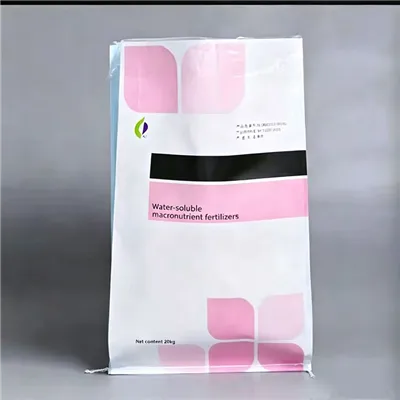
If you’re sitting there with a liquid product, staring at your current packaging that’s not working, or you’re about to launch a new liquid line and aren’t sure what bag to use—hit us up. We don’t push the most expensive bag; we push the one that works for your product, your budget, and your brand’s goals. Whether you need stand-up pouches, spout pouches, gusseted bags, whatever—we’ve got you. We’ll send test samples, answer all your annoying questions (I’ve heard them all), and make sure your liquid product gets the printed bag it deserves, no leaks, no smudges, no stress.
Poly Bag Agriculture References:
- U.S. Food and Drug Administration. (2023). Food Contact Substances: Safety Requirements for Packaging Materials.
- European Food Safety Authority. (2022). Guidance on Assessment of Food Contact Materials and Articles.
- Packaging Association. (2021). Barrier Properties of Flexible Packaging for Liquid Food Products.
Liaoning Xunlian Packaging Products Co., Ltd.
Liaoning Xunlian Packaging Products Co., Ltd. is one of the most professional printed food bags manufacturers and suppliers in China, featured by quality products and good service. Welcome to wholesale CE approved printed food bags made in China here and get quotation from our factory. Customized orders are welcome.
Address: Chaoyang Industrial Park, Kangping, Shenyang, Liaoning, China.
E-mail: info@xunlianpack.com
WebSite: https://www.xunlianpack.com/
