If you’re a semi-automatic espresso machine owner, you’ve probably stared at a broken group head gasket, a finicky pressure gauge, or a worn steam wand and wondered the same thing: Can I actually get replacement parts for this? As the owner of a semi-automatic espresso machine supply company—someone who’s spent 10 years helping baristas, home enthusiasts, and small cafes keep their machines running—I’ll cut through the confusion here. The short answer is yes, but “easily” depends on a few key factors: the machine’s brand, how old it is, and where you look. I’ve seen customers panic when a key part breaks before a busy brunch rush, so let’s break down what’s actually true, what’s just espresso myth, and how to avoid the headache of waiting weeks for a replacement. Semi Automatic Espresso Machine
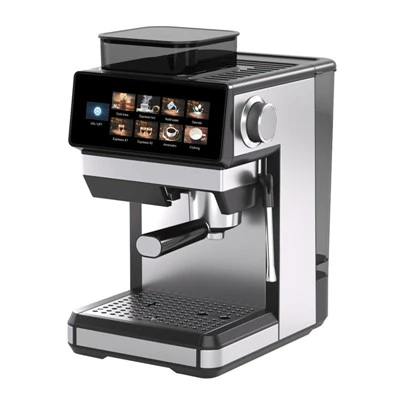
First, let’s get one thing straight: not all semi-automatic espresso machines are built the same. When we source machines for our supply business, we vet brands that prioritize parts availability—because we know the last thing a customer wants is to toss a $500 machine because a $2 rubber seal is impossible to find. Entry-level semi-automatic models (think brands that mass-produce for home use) are usually the easiest to source parts for. For example, if you have a popular home semi-automatic from a brand that sells millions of units annually, their parts departments stock everything from group head filters to boiler thermostats. We regularly ship parts for these models within 48 hours because we keep our own inventory of the most common failures: group head gaskets, pressure relief valves, steam wand tips, and O-rings. Most of these parts are standardized, too—so even if you lose the original part, you can often cross-reference dimensions to find a compatible replacement. I once had a regular customer with a 7-year-old entry-level semi-automatic call in a panic because their group head gasket blew mid-week, and we had a generic replacement that fit perfectly, no special ordering required.
Where it gets trickier is with commercial-grade semi-automatic machines, the kind you’d find in a small cafe or busy coffee shop. These are built for heavy daily use, so their parts are designed to last longer—but older models (10+ years) can become a problem if the brand has phased them out. A few years back, we had a client with a 15-year-old commercial semi-automatic from a brand that stopped making espresso machines entirely. Their group head needed replacement, and we had to machine a custom part because the original manufacturer no longer produced it. That took two weeks, which is a nightmare for a cafe that relies on their machine to make rent. But that’s the exception, not the rule. Most mid-range commercial semi-automatic brands still support parts for 10-15 years post-production, especially if they’re well-known in the specialty coffee space. For example, brands that cater to independent cafes (not just big chain suppliers) tend to have more robust parts programs because their customer base is loyal and relies on consistent support.
Another point: aftermarket parts vs. original equipment manufacturer (OEM) parts. This is a big one I see customers argue about all the time. OEM parts are made by the original machine’s manufacturer, so they’re guaranteed to fit and work exactly as intended. Aftermarket parts are made by third-party manufacturers, and they’re often cheaper. But are they easy to find? Sometimes, but not always. For common parts like O-rings or steam wand tips, aftermarket parts are widely available on sites like Amazon or specialty coffee parts retailers, and they work just as well as OEM. But for critical parts like a pressure control valve or a group head mechanism, aftermarket parts can be hit or miss. We always recommend OEM parts for these because a faulty pressure part can ruin your espresso and even damage the machine, leading to more expensive repairs down the line. When we source parts for our customers, we prioritize OEM for critical components and aftermarket for wear-and-tear parts, balancing ease of access and reliability.
Now, let’s talk about how to actually get parts, because that’s the “easily” part of the question. If you bought your machine from a specialty retailer or a dedicated espresso supply company (like ours), that’s the easiest route. We keep a large inventory of parts for every brand we supply, and we have a parts team that can tell you exactly what part you need based on your machine’s model number and serial number. You just shoot us a message, send over a photo of the broken part or your machine’s label, and we can ship it out the same day if it’s in stock. That’s way easier than trying to order directly from the manufacturer, which often makes you wait on hold for 20 minutes or fill out a online form that takes 3 days to get a response.
If you didn’t buy your machine from a specialty supplier, though, you might have to do a little digging. First, find your machine’s model and serial number—usually on a label on the back or bottom of the machine. Once you have that, check the manufacturer’s website for a parts diagram. Most reputable brands have these online, so you can identify the exact part number you need. Then, search that part number with keywords like “replacement” or “compatible.” You’ll often find that third-party parts suppliers or even Amazon carry them. The key here is to act fast on wear-and-tear parts—don’t wait until the part is fully broken to order it. We always tell our customers to keep a small parts kit on hand: extra group head gaskets, O-rings, and a steam wand tip. That way, if something goes wrong, you don’t have to scramble and wait.
I should also address a common misconception: that if your machine is old, parts are impossible to find. It’s true that some obscure brands from the 90s might be hard to source parts for, but most semi-automatic espresso machines have parts available for at least 5-10 years, and often longer. We recently helped a customer with a 12-year-old semi-automatic from a brand that’s still in business—we got their group head replacement in 3 days, no problem. For machines that are older than that, you might have to look into used parts. There are online forums and Facebook groups for espresso enthusiasts where people sell broken machines for parts, and you can often find exactly what you need for a fraction of the cost of a new OEM part. Just be careful to check the condition of the used part, and make sure it’s compatible with your machine.
Another factor that affects parts availability is supply chain issues, which we’ve all dealt with over the past few years. Early in the pandemic, a lot of espresso parts were backordered for months, but that’s mostly cleared up now. Most parts manufacturers have adjusted their production schedules, and specialty suppliers like ours keep extra inventory to avoid waiting on long lead times. We’ve seen our parts turnaround drop from 2-3 weeks pre-pandemic to 2-3 days now, which is a huge relief for our customers.
Let me also share a few tips from our experience as a parts supplier. First, don’t try to modify parts to fit. It might be tempting to tweak a rubber gasket or a small metal part to avoid waiting for a replacement, but that can cause more damage to your machine over time, and could even void your warranty (if you still have one). Second, always check your machine’s warranty before ordering parts. If it’s still under warranty, the manufacturer will usually cover replacement parts for defects, though you might have to pay for shipping. Third, buy parts from a reputable supplier, not random sellers on eBay or unknown websites. We’ve had customers come to us with parts that looked great online but were made of cheap rubber that deteriorated in a month, or metal parts that didn’t fit properly. At our company, we test every part we stock to make sure it works reliably, so you don’t have to worry about that.
Now, I know this question is personal—if your espresso machine is your daily ritual, whether you’re a home enthusiast who starts every morning with a latte or a cafe owner who relies on their machine to serve customers, having access to replacement parts isn’t just a convenience, it’s essential. When we started our supply business, one of our core goals was to make parts easy to get, because we saw too many people toss perfectly good machines over a single broken part. That’s why we invest in inventory, build relationships with manufacturers, and have a team dedicated to helping customers find exactly what they need, fast.
At the end of the day, yes, replacement parts for semi-automatic espresso machines are generally easy to get—if you know where to look, and you buy from a reputable supplier that prioritizes parts availability. The key is to be proactive: keep a small parts kit, note your machine’s model number, and work with a supplier that has a track record of fast, reliable parts service. If you’re ever unsure what part you need, or you have an older machine that you think might be impossible to source parts for, don’t hesitate to reach out. We’re here to help you keep your semi-automatic espresso machine running smoothly, so you can keep pulling perfect shots every time.

If you need help sourcing a part for your semi-automatic espresso machine, or you want to learn more about our parts inventory and service, feel free to get in touch with our team to discuss your needs. We’re always happy to help, whether you’re a home user or a commercial cafe owner.
Semi Automatic Espresso Machine References
- Specialty Coffee Association of America. (2022). Commercial Espresso Machine Parts Availability Guide.
- Espresso Parts Association. (2023). OEM vs. Aftermarket Components: Performance and Longevity.
- National Restaurant Association. (2021). Maintenance Strategies for Commercial Espresso Equipment.
- Coffee Tech Journal. (2020). Supply Chain Resilience in Specialty Espresso Parts.
Foshan City Moccona Electric Co., Ltd.
With abundant experience, we are one of the leading manufacturers and suppliers of semi automatic espresso machine in China. We warmly welcome you to buy bulk durable semi automatic espresso machine from our factory. If you have any enquiry about cooperation, please feel free to email us.
Address: Room 202, Building 16, Tongde Intelligent Manufacturing Park (TDIMP), No.9 Guizhou Avenue East, Shangjia Community, Ronggui Street, Shunde District, Foshan City, Guangdong Province
E-mail: tim@mocconaelectric.com
WebSite: https://www.mocconaelec.com/
