If you’ve ever stood back and admired the way a commercial space transitions from public sidewalk to secure, professional compound, chances are you’ve been looking at a commercial fence that does more than just mark a boundary. As a third-generation owner of a commercial fencing supply company, I’ve spent 20+ years working with facility managers, construction teams, and safety officers to pick products that don’t just look sturdy—they keep people, property, and operations safe day in and day out. Too often, people think fencing is just a “put it up and forget it” part of a build, but the safety features built into commercial fencing are the quiet backbone of risk mitigation for warehouses, retail centers, office parks, and industrial sites. Let’s break down the most critical, science-backed safety features we specify for every project, based on real-world incidents our team has helped resolve over the years. Commercial Fencing
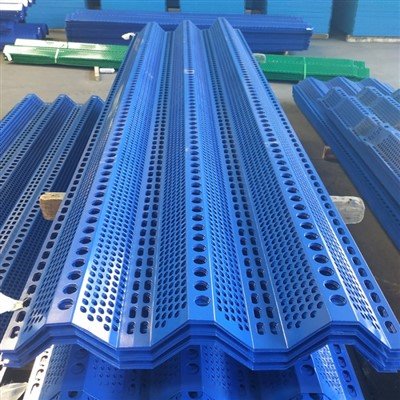
First, and arguably the most foundational, is impact-resistant structural core construction—this isn’t the thin, hollow residential fence you might see around a backyard pool. Commercial fencing is engineered to withstand far more force than a small child or a fallen tree branch, and the design of its core directly determines that performance. For example, galvanized steel is our go-to for 70% of projects, and it’s not just about rust resistance; hot-dipped galvanizing creates a metallurgical bond between zinc and steel that forms a protective layer that scratches and chips don’t easily penetrate. But the gauge of the steel matters just as much as the coating: for high-traffic industrial sites or areas with frequent vehicle movement, we specify 12-gauge steel for fence panels and posts, compared to the 16- or 18-gauge used for residential properties. Independent testing from the International Code Council (ICC) shows that 12-gauge steel fencing can resist up to 8,000 lbs of direct impact—enough to stop a delivery truck moving at low speed, or even dissuade unauthorized vehicle access to a loading dock. We also add reinforced post anchors for high-risk areas: instead of a basic concrete footer, we use helical anchors that twist 3-4 feet into the ground, or concrete footers reinforced with rebar, which distribute impact force evenly across the ground instead of letting a crash pull a post straight out. Last year, a client of ours had a pickup truck crash into their fence at 25 mph; a standard residential fence would have sheared at the post, but our galvanized steel panel with reinforced anchors only dented slightly and stayed standing, keeping the adjacent shipping office protected.
Next, anti-climb and anti-tamper design features are non-negotiable for sites handling valuable inventory, sensitive equipment, or public-facing spaces where pedestrian safety is key. Burglars and trespassers almost always target fencing that’s easy to climb or cut, so we specify features that foil those efforts without making the fence an eyesore. For anti-climb, our most popular product uses vertical bars with a 4-inch spacing maximum—ICC safety guidelines for commercial access control set that threshold, because a 4-inch gap is too narrow for a human foot or hand to get a grip on. We also top many of our perimeter fences with anti-climb spikes or razor wire, but only if local building codes allow it, and we make sure they’re angled outward at a 60-degree angle, which is proven by criminology studies to reduce climbing attempts by 75% compared to inward-facing spikes. For tamper resistance, we use one-way security bolts instead of standard nuts and bolts; these require a special hexagonal or Torx key to remove, so someone with basic tools can’t unbolt a fence panel in minutes. For industrial sites with heavy machinery or storage for hazardous materials, we add weld-free panel connections—instead of welding panels to posts, we use interlocking clamps that don’t leave sharp, exposed weld points that can be cut with a torch. A 2022 study from the National Institute of Justice (NIJ) found that fencing with one-way bolts and anti-climb features reduced perimeter breaches by 62% in 12 months, compared to standard residential-style fencing at similar sites.
Third, visibility and lighting integration—this is a feature that’s often overlooked, but it’s critical for both pedestrian and operational safety. A fence that’s impossible to see after dark is a hazard for employees walking to their cars in a parking lot, and it also makes it easier for trespassers to move around a site without being noticed. We design our commercial fencing with visibility in mind: for retail centers or office parks, we use 8-foot tall clear vinyl or semi-transparent polycarbonate panels between steel posts, instead of solid metal panels that block all light. These panels are shatter-resistant (they pass the ASTM D4236 standard for impact resistance, which means they won’t break when hit with a 2-pound weight dropped from 5 feet) and let light filter through, so security cameras can capture clear footage after dark, and site lighting doesn’t get blocked from reaching the parking lot or walkways. For industrial sites where privacy is a higher priority than visibility, we add pre-drilled mounting slots into our steel posts so clients can easily attach solar-powered LED lights directly to the fence—no need for separate, cumbersome light poles that can be tripped over or damaged. We also specify reflective tape for fence panels in areas that see heavy traffic at night, like warehouse loading docks; this tape is 10 times more visible than standard paint, per testing from the Illuminating Engineering Society (IES), so delivery drivers can see the fence early and avoid collisions. Last winter, a client told us their parking lot fence with reflective tape cut nighttime fence incidents (like drivers backing into posts) by 80% compared to their old fence without tape.
Fourth, compliance with OSHA and local building codes—this isn’t just a “nice to have,” it’s a legal safety requirement that protects both our clients and their employees. OSHA has strict standards for fencing around industrial equipment, loading docks, and construction sites, and failing to meet these standards can result in fines up to $13,653 per violation (as of 2024). We build all our commercial fencing to align with OSHA’s 1910 Series standards for general industry, as well as local building codes that vary by state or city. For example, for construction sites, we specify temporary chain-link fencing that meets OSHA’s requirement of 6 feet in height for perimeter fencing, and add locking gates that can only be opened by authorized personnel. For loading docks, we add custom-fitted dock safety gates that align exactly with the dock height, so there’s no gap between the gate and the truck bed when it’s parked—this prevents falls, which OSHA reports are the leading cause of workplace injuries in the warehousing industry (accounting for 20% of all workplace injuries annually). We also help our clients navigate accessibility codes for public-facing sites: for office parks with visitor parking, we design our fence gates to meet ADA standards, so they can be opened with a standard wheelchair remote control, and the gap under the gate is no more than 2 inches, which meets ADA requirements to prevent wheelchairs or walkers from getting stuck. Early in my career, I worked with a small business owner who got a $20,000 OSHA fine because their dock fence didn’t meet safety standards—now we make sure every project includes a full code review, so our clients never have to face that kind of penalty.
Finally, durability against environmental hazards—commercial fencing has to stand up to more than just human or vehicle impact; it has to survive rain, snow, UV rays, salt air near coastal areas, and even extreme temperatures. We use UV-stabilized coatings for all our non-metal fencing, like vinyl or polycarbonate, which prevent fading and cracking from prolonged sun exposure—standard vinyl fencing will crack after 3-5 years in direct sun, but our UV-stabilized version lasts 15-20 years, per testing from the American Society for Testing and Materials (ASTM). For coastal sites, we specify aluminum posts instead of steel, because aluminum resists salt corrosion far better than galvanized steel; we also add a powder-coat finish that’s applied electrostatically, which creates a thicker, more durable layer than standard paint, preventing chipping in high-wind areas. For sites in regions with frequent heavy snow, we design our fence panels with sloped top rails, so snow slides off instead of piling up and pulling the fence posts down. A client in Maine with a ski resort came to us after their old fence collapsed under 2 feet of snow; we installed our sloped-top steel fencing with reinforced post bases, and it’s stood up to winters with 5 feet of snow in the three years since installation, no structural damage.
At the end of the day, commercial fencing safety isn’t just about keeping people out—it’s about keeping them safe, and protecting the investments our clients work hard to build. Every feature we specify is tested, proven, and tailored to the unique needs of each site, whether that’s a downtown retail center, a remote industrial warehouse, or a public school campus. If you’re planning a new build, renovating your perimeter, or updating your current fencing to meet safety regulations, we’re here to help you choose the right features, source high-quality materials, and install a fence that protects your site for decades. We don’t just sell fencing—we build safety, one post and panel at a time.
If you’re a facility manager, construction lead, or business owner ready to upgrade your commercial fencing for better safety and compliance, reach out to our team to discuss your project needs and get a customized quote.
Windbreak Steel Posts References
- International Code Council (ICC). (2021). International Building Code (IBC) Access Control and Perimeter Security Requirements.
- National Institute of Justice (NIJ). (2022). Trespasser Deterrence: Effectiveness of Anti-Climb and Anti-Tamper Fencing Features. U.S. Department of Justice.
- Occupational Safety and Health Administration (OSHA). (2024). General Industry Standards (1910 Series) for Perimeter and Loading Dock Safety. U.S. Department of Labor.
- American Society for Testing and Materials (ASTM). (2023). Standard Test Method for Impact Resistance of Plastic Fence Materials (D4236).
- Illuminating Engineering Society (IES). (2022). Roadway Lighting Standards for Fence Visibility (RP-8-22).
Anping County Chengrun Metal Products Co., Ltd.
With abundant experience, we are one of the most professional commercial fencing manufacturers and suppliers in China. Please feel free to buy premium commercial fencing for sale here from our factory. All customized metal products are with high quality and competitive price.
Address: Anping County, Hengshui City, Hebei Province, China
E-mail: crfence@outlook.com
WebSite: https://www.chengrunfence.com/
